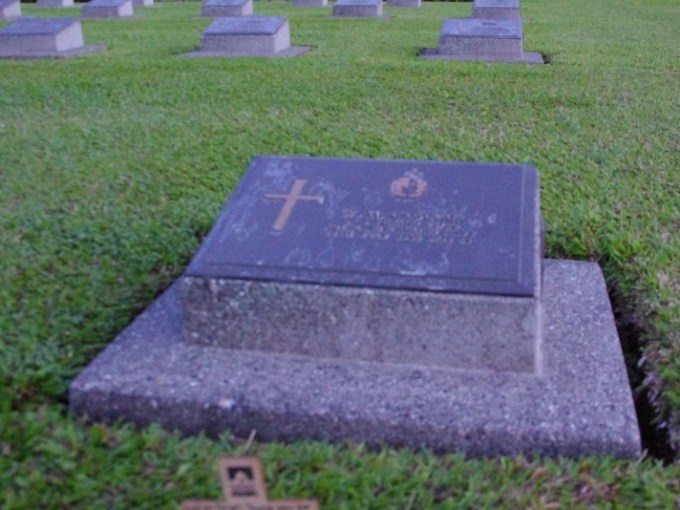
The Lae community commemorated ANZAC Day with a dawn service at the War Cemetary. It is a beautiful place, and represents a significant aspect of PNG history and the relationship between PNG and Australia. http://en.wikipedia.org/wiki/Lae_War_Cemetery
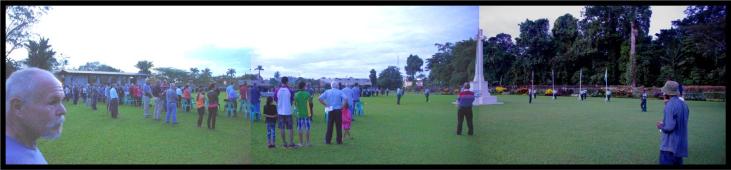
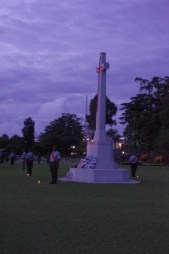
Serving Australian and PNG Defence Force (ADF and PNGDF) personnel based at Lae’s Igram Barracks officiated, with an NZDF Officer representing New Zealand, and over 300 people attended. The ceremony commenced with a lone bagpiper from the PNGDF, and, of course, the Last Post and Reveille on bugle was a moving moment. It was encouraging that there were two scripture readings, followed by heartfelt prayers from two local chaplains.
A Turkish Australian spoke of the way in which the graves on the Gallipoli Peninsula are tended by caring locals. “There is no difference between Johnnies and the Mehmets to us where they lie side by side… After having lost their lives on this land, they have become our sons as well.”
At the conclusion, a number of small wooden crosses were distributed to the children present, to be placed on some of the headstones. The crosses were sent by various Australian schools, with messages from the students acknowledging the sacrifices made.
As the national anthems of our three countries, Papua New Guinea, Australia, and New Zealand were played, I could not help but notice the contrast.
The PNG anthem features… New Zealanders rise to the words… Now give thanks to the good Lord above God of Nations at Thy feet, For His kindness, His wisdom and love In the bonds of love we meet, For this land of our fathers so free, Hear our voices, we entreat, Papua New Guinea. God defend our free land.
Australia, alone, makes no reference to God in her anthem. We focus on the natural wealth and beauty of our land without acknowledging the Creator who blesses us in this way. Further, we declare our intention to rise amongst the nations as we “toil with hearts and hands”. [Though, if you only hear the anthem at the opening of a footy game, you may not have caught the second verse!]
King Nebuchad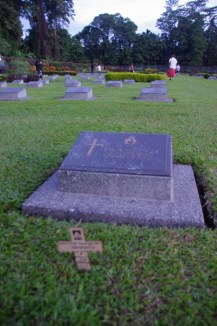 nezzar had a similar attitude;
As the king was walking on the roof of the royal palace of Babylon, he said, “Is not this the great Babylon I have built as the royal residence, by my mighty power and for the glory of my majesty?” (Daniel 4:29-30)
A time of humbling follows, and Nebuchadnezzar comes to “praise and exalt and glorify the King of heaven, because everything he does is right and all his ways are just.” (4:37)
I know that an anthem does not determine a country’s attitude to God, but ours is a fairly strong indicator of the desire of many to see God excluded from the future of our Australian society, and sanitised out of its history.
There is a lot to be said for the role Australia has played, and continues to play in PNG. Economically, politically, legally – there are strong bonds between us, and the people know it. Amongst the locals, much is also made of the positive impact the gospel has had on society, on communities, and on families. Sadly, in Australia, we seem to have largely forgotten.
Please pray …
- praise God for the acknowledgement of His blessing in PNG
- pray that God raise up leaders – both in PNG and Australia – who recognise God’s authority



 support them.



 “[May God] equip you with everything good for doing his will, and may he work in us what is pleasing to him, through Jesus Christ, to whom be glory forever and ever.” Hebrews 13:21


 t to fund other necessities. Growing up on a bikpela gaden (farm) has helped telling stories of sugar cane and veggie patches in Tok Pisin – and everyone here loves a good snake story!
 and poor grammar with much patience and grace. The children laugh… and we laugh along with them!
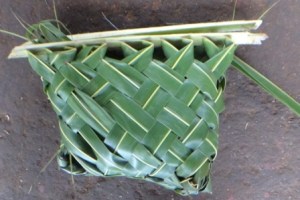
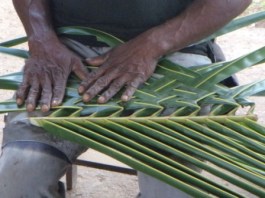
 r woven from the strips of new green banana leaves. Easy to m
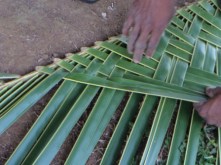 ake.
ake. this one carefully in less than two minutes. The basket is filled with rice and dropped into boiling water.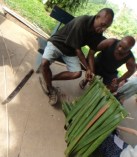


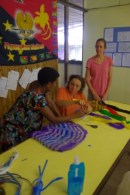

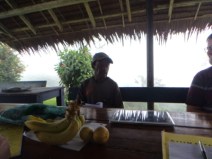 k Pisin tisa (teacher), who walks up the mountain every day to spend mornings with us. Tisa Bat patiently corrects our mistakes, and encourages us to keep trying, keep learning. He knows that it is only through wantok (common language) that real relationships can be built. Wantok is a core value of PNG culture, maintaining ties within the village, clan, and nation.
 campbell ramblings
You must be logged in to post a comment.