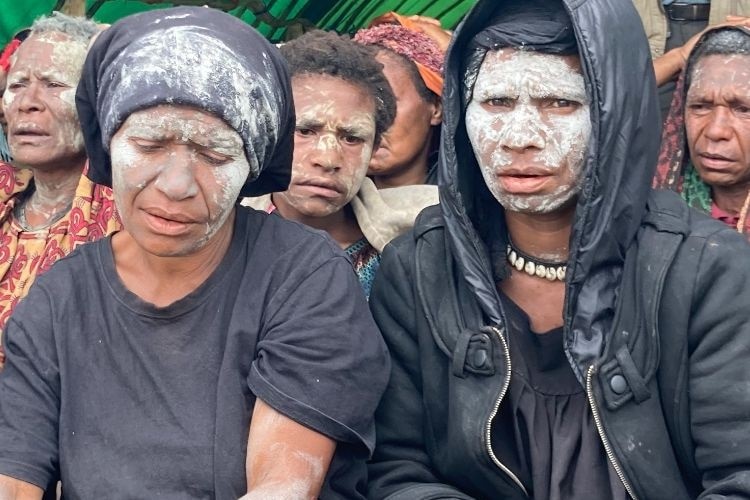
Of the many cultural differences we experience in PNG, perhaps one clearly evident example involves the grieving process. It can be very confusing to the outsider, and easily misinterpreted. With the recent tradgedy of the Enga landslide being shown on our TV news, there have been many images of mud plastered faces, from sombre adults to young children looking slightly confused by it all.
Outsiders can be quick to judge such public displays of communal mourning. Does everyone participating feel the burden of grief? Possibly not. It may be seen to be something akin to the scene in Mark 5, when Jesus confronts the crowd of mourners at the home of Jairus, “Why all this commotion and wailing? The child is not dead but asleep.” Their insincere mourning turned immediately to mocking laughter.
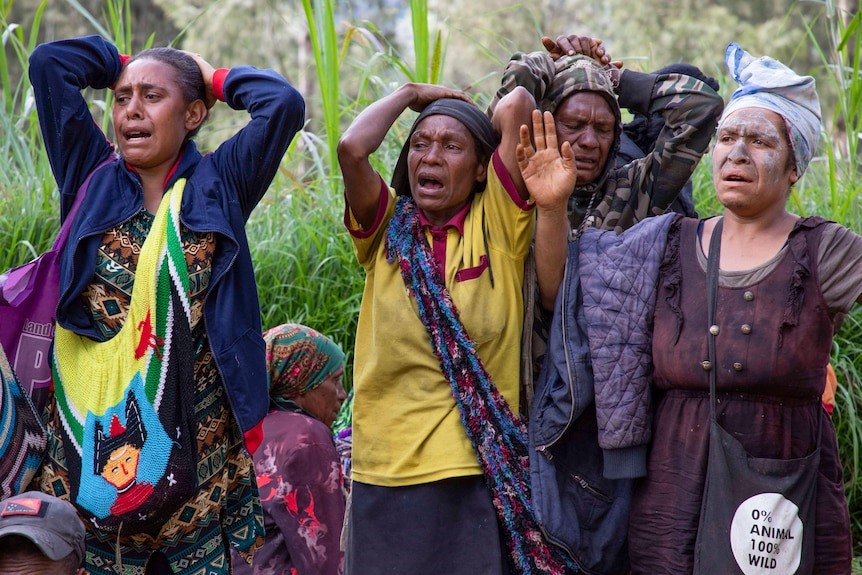
In PNG, grief is not a private affair. There is an expectation within the community that a bereaved family will open their home and their lives to others, to participate in that moment. Often large meals are prepared, at great expense to the family and with support from relatives, employers, and perhaps local leaders depending on the status of the deceased person or their surviving spouse.
While managing our mission centre in Lae, we represented our organisation at a haus krai, a very public gathering of family and community following the death of an older woman who had, for a time, been an employee many years earlier. We had expected to feel like intruders on a very personal situation, but a young man led us past over a hundred people sitting in family groups, to where the grieving widower – who we had never met – sat in silence surrounded by immediate family. Our guide bent to whisper in the old man’s ear, explaining our presence, and when he saw our work shirts with our mission logo he embraced Keith heartily and wept. For him, our being there was quite understandable, and genuinely appreciated.
This public grieving in PNG is a process which binds a community and reinforces their shared experiences and beliefs, something the people refer to as wanbel in tok pisin – being of one heart. This is a concept which extends far beyond family connections, and can even embrace a visitor from Australia in the most unexpected ways.
Prayer points
- Pray for the Mulitaka community as they continue to search for family members.
- Pray that survivors would cast their anxiety on God, and know that He cares for them (1 Peter 5:7)
- Pray that the response of governments and aid agencies would be appropriate to the circumstances, and that tensions around the situation would be eased as a result.
 campbell ramblings
You must be logged in to post a comment.